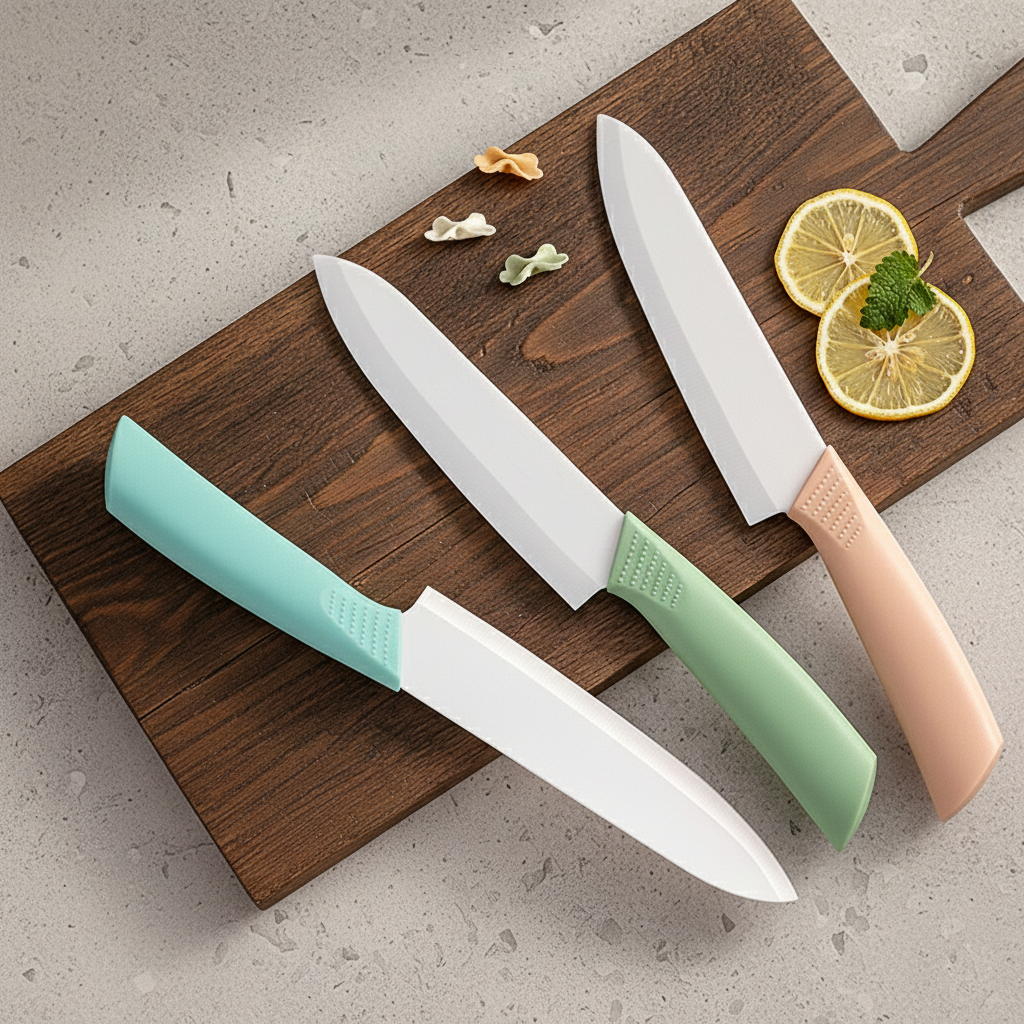
Ceramic kitchen knives can be excellent for specific tasks, but they’re not a universal replacement for traditional steel knives. Some love them for their razor-sharp edge and low maintenance, others often prefer steel for its versatility and durability.
Pros
Crafted from advanced zirconia ceramic, ceramic blades stay razor-sharp far longer—often up to 10× longer than steel—with minimal need for sharpening. Excel at slicing soft foods such as tomatoes, produce, bread, and boneless meats with effortless precision.
Weighing roughly half as much as steel knives, ceramic knives reduce hand and wrist fatigue, making them comfortable for extended prep sessions.
Never rust, won’t transfer metallic tastes, and don’t absorb odors or stains from foods like garlic or onions—helping preserve the natural flavors of fruits, vegetables, and herbs.
Their non-porous surface resists bacteria and food residue, so cleanup is as simple as a quick rinse.
Cons
Brittle and prone to chipping or breaking, they can snap if dropped, twisted, or used on hard surfaces, or tough foods (bones, frozen items, squash). Micro-chips can even end up in food, raising safety concerns.
Not for heavy-duty tasks like chopping bones, prying, or rocking cuts. Avoid flexing or lateral pressure.
Not always the sharpest out of the box, some feel thicker or less refined than high-end steel.