Crochet is a remarkably versatile craft, extending far beyond simple blankets. Depending on the tools employed and how the yarn is worked, one can create a diverse array of pieces, ranging from sturdy, three-dimensional sculptures to delicate, airy lacework.
Different crochet techniques are typically categorised according to the tools required, the desired visual style, or the specific construction of the stitches.
Traditional Crochet Techniques
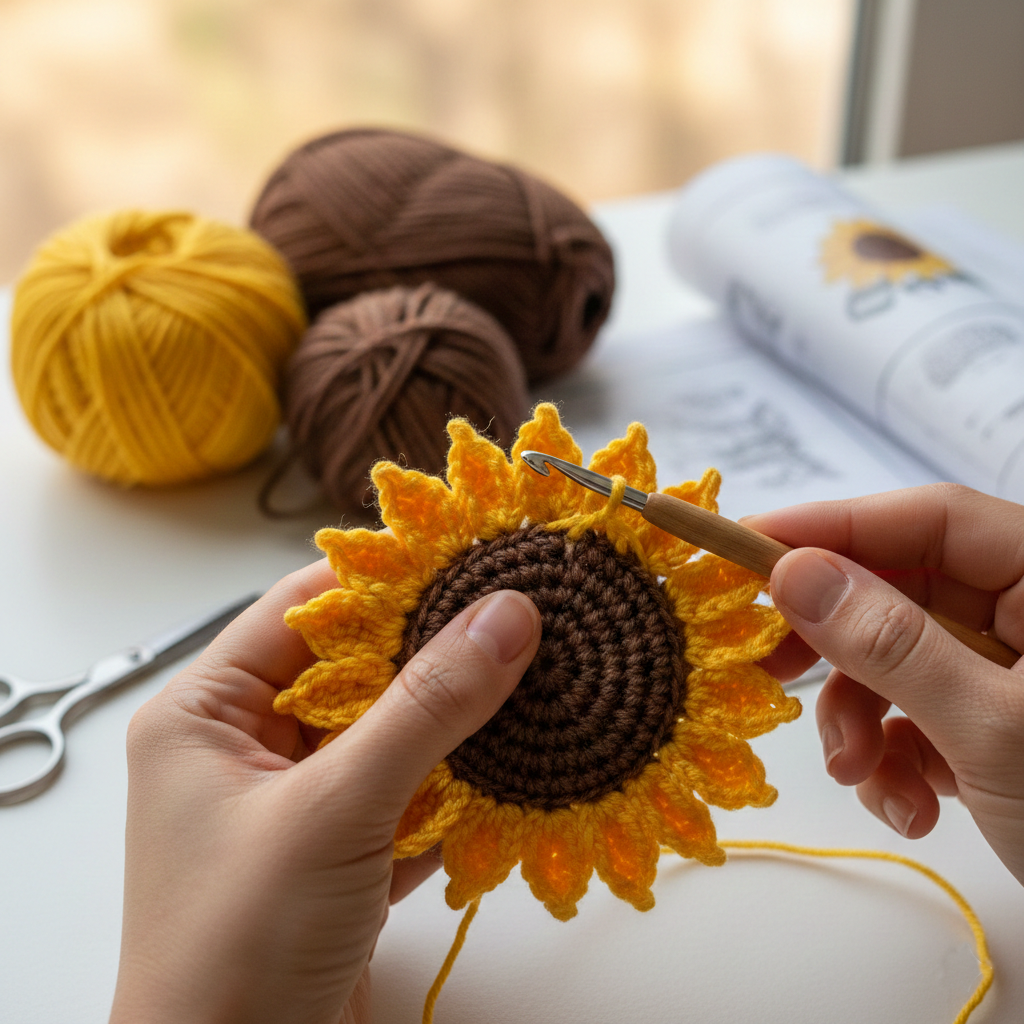
Amigurumi: A Japanese knitting or crochet technique for creating small stuffed toys. It primarily employs tight single crochet stitches worked in the round to form dense fabric suitable for stuffing.
Corner-to-Corner: This method involves working diagonally from one corner to another rather than horizontally. It is frequently employed for creating “patterned blankets”, as each small “square” functions like a pixel.
Filet Crochet: Utilises a grid-like openwork mesh and solid squares to create “drawn” patterns, often used for crafting vintage-style tablecloths or curtains.
Tapestry & Intarsia: Both are colourwork techniques. Tapestry crochet conceals unused yarn within stitches, whilst intarsia crochet employs separate skeins for each colour block, resulting in a lighter fabric.
Specialised Techniques
Tunisian Crochet: Employing an exceptionally long crochet hook (sometimes with a cord attachment). All stitches are retained on the hook, akin to knitting, ultimately producing a thick, weave-like fabric.
Hairpin Lace: Stitches are worked around a “loom” or “fork” (two parallel metal rods). This creates long loops which are then joined together to form exceptionally delicate, lightweight shawls.
Broomstick Lace: Traditionally employing a broomstick (now typically a large knitting needle) to pull up long loops, which are then joined with a crochet hook to create distinctive ‘eyelet’ patterns.
Double-Ended Crochet: Utilising a double-ended crochet hook to create reversible, knit-like fabric, often working with two contrasting colours.
Decorative and Advanced Crochet Techniques
Layered Crochet and Mosaic Crochet: These techniques involve working stitches into the row below to create raised geometric or colour patterns.
Bavarian Crochet: A distinctive crochet method employing circular fan stitches and cluster stitches to form richly textured diamond patterns.
Freeform Crochet: Often termed the “jazz” of crochet. It eschews fixed patterns; you can organically combine different stitches, colours, and textures to create unique textile artworks.
Irish Lace: Characterised by independent botanical motifs (leaves, roses), which are subsequently connected through a dense network of chain stitches.